
A place for knowledge.
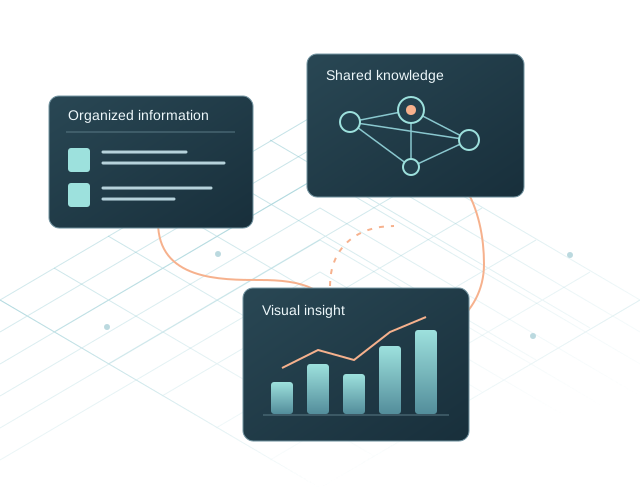
Web-based repositories give information a common home. Organize research documents, records, and reference material around the questions your team needs to answer.
Information repositories
For research and data teams
Independent thinking. Connected information.
Research moves further
when information connects.
We develop web-based information repositories with a focus on data sharing—helping research and data teams bring knowledge together, visualize patterns, and move from information to insight.
An intellectual property holding company.
Built around the value of shared knowledge.
Our focus
Our work starts with a practical research question: how can information become easier to find, share, and understand?
Web-based repositories give information a common home. Organize research documents, records, and reference material around the questions your team needs to answer.
Information repositories
Data grows more valuable when it can be shared with context. Our focus is information that travels usefully between researchers, collaborators, and systems.
Purposeful data sharing
Rapid visualization and analytics shorten the path from a question to a useful view. Compare patterns, explore changes, and identify the next question worth investigating.
Visualization & analytics
Product portfolio
Explore the areas of focus behind our product development, from a common home for research to a clearer view of the data.
Product names, availability, and individual licensing details are forthcoming.
Portfolio area · Organize
Bring research records, supporting documents, and reference material into a common web-based home, organized around the work your team does.
Potential applications: research collections, reference libraries, and evidence repositories.
Portfolio area · Connect
Explore how shared information can remain useful as it moves between research teams, contributors, and the people who depend on their work.
Potential applications: shared knowledge hubs, cross-team resources, and collaborative information collections.
Portfolio area · Understand
Put selected information into a useful visual frame. Explore comparisons, patterns, and changes that can help your team decide what to investigate next.
Potential applications: exploratory dashboards, comparative views, and research reporting.
A little perspective
A useful visualization brings a research question into focus. Explore sample repository activity, narrow the time period, or change the chart.
An interactive illustration using sample data. These figures do not represent company or customer performance.
Explore the example dataThe insight workspace
Contributions
455Monthly average
75.8June
128| Month | Contributions |
|---|---|
| January | 42 |
| February | 58 |
| March | 53 |
| April | 78 |
| May | 96 |
| June | 128 |
Our company story
Western Intellect is an intellectual property holding company specializing in the development of web-based information repositories, with a focus on data sharing.
The idea behind the company is practical: knowledge becomes more useful when people can find it, share it with context, and understand what it shows. For research and data teams, that connection is part of moving work forward.
“Computing for Results” brings our focus together. It connects the work of developing intellectual property with the purpose of web-based repositories: helping useful information reach the people who need it.
Identify the decision, the audience, and the information that matters.
Make information understandable as it moves between people and systems.
Turn a useful view into a clearer conversation and a better-informed action.
Explore licensing
Explore how a product could fit the way your research or data team works. A useful licensing discussion starts with your intended use, the people involved, and the information being shared.
Start with your research needs
Choose an area to explore, then describe the result your team has in mind.
Individual products, availability, deployment options, and licensing terms need confirmation. The brief builder helps you organize your questions.
A few good questions
Western Intellect holds and develops intellectual property, specializing in web-based information repositories with a focus on data sharing. Visualization and analytics help explain how that information can become useful.
We mean reducing the steps between asking a question and seeing a useful answer: selecting relevant information, comparing it clearly, and exploring patterns without unnecessary friction. Speed should support understanding.
Research and data teams exploring better ways to organize research material, share knowledge, and understand data. The right repository and the right view depend on the people and research questions involved.
Start with the portfolio areas, choose the closest fit in the licensing section, and prepare a brief describing your intended use. Product names, availability, and individual licensing details are forthcoming.